October 5, 2026
How to Get Fleet Detailing Contracts as a Mobile Detailer
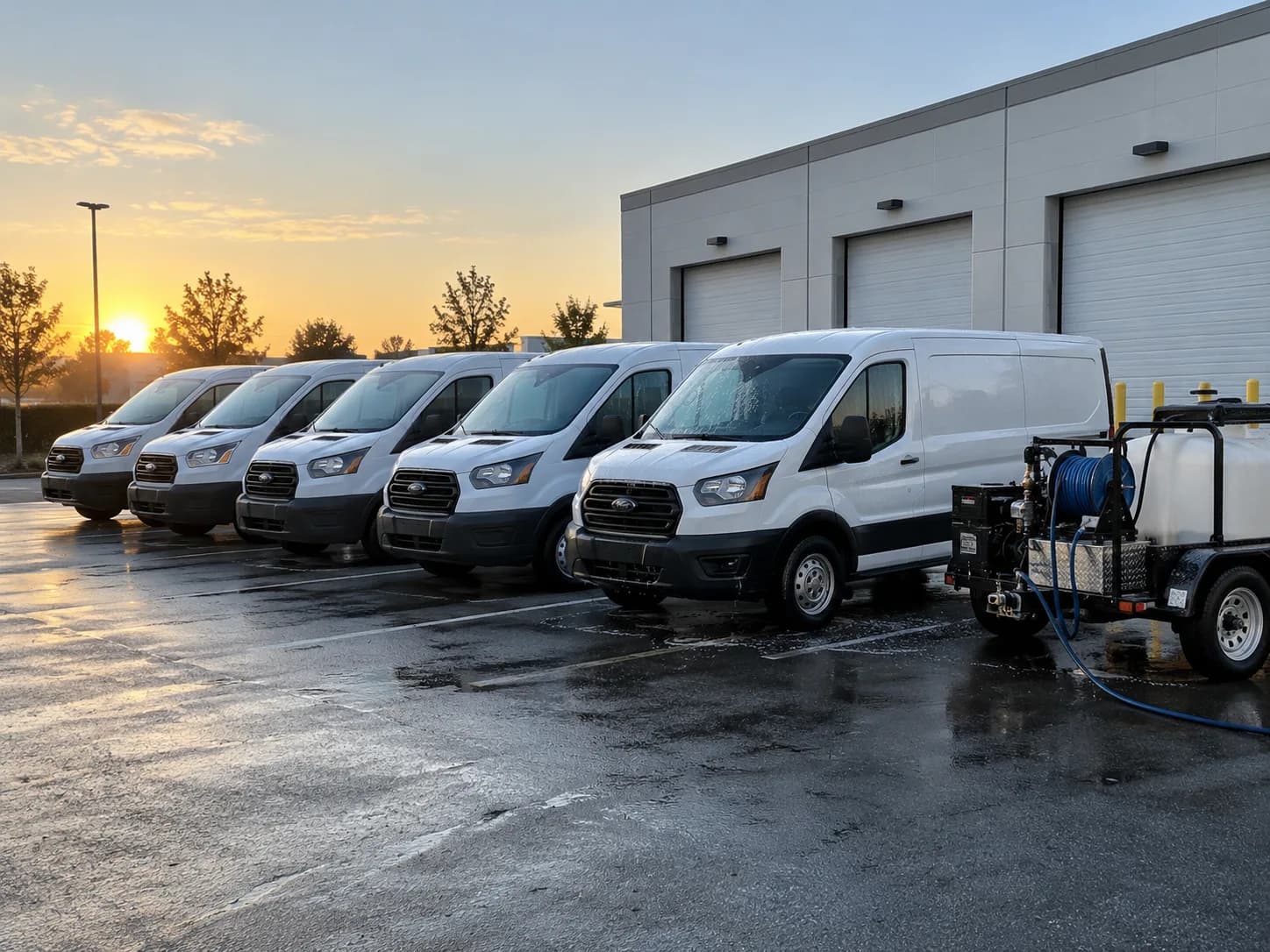
Retail customers are great, but they come and go. One month you're booked solid, the next month it rains for two weeks and everyone cancels; fleet work changes that. A company that needs its vehicles cleaned every week or every month gives you something most mobile detailers never have: predictable volume on the calendar before the month even starts.
Fleet contracts aren't easy to land, and they work differently from selling to homeowners. Here's how to find the right prospects, price the work, pitch it, and keep the account.
What Fleet Managers Actually Want
Homeowners buy a clean car. Fleet managers buy a problem solved. Their priorities usually look like this:
Minimal downtime. Vehicles out of service cost them money.
Consistency. Every van should look the same every time.
Reliability. Vendors who disappear after month two are their biggest frustration.
Simple billing. One clear invoice per period, with detail they can hand to accounting.
Proof. Photos or records showing the work was done.
If your pitch is all about your products and your polish, you'll lose to someone who talks about uptime and reporting. Lead with what they care about.
Who to Target
Not every business with vehicles is a good fit. Start with companies that have a reason to care about how their vehicles look and a lot to park them in.
Strong starting targets
Car dealerships: Used car prep, lot washes, and service loaners.
Real estate brokerages: Agents drive clients around, and appearances matter.
Home service companies: Plumbers, HVAC, pest control, and landscapers with branded trucks.
Rental and car share operators: High turnover means frequent cleaning.
Property managers and apartment communities: Some offer on site detailing as a resident perk.
Delivery and logistics companies: Large volume, usually exterior focused.
Local government and utilities: Slower to buy, but steady once you're approved as a vendor.
Build a focused list
Pick 20 to 30 businesses within your service area and research each one. Find the fleet manager, operations manager, or owner. A short list you actually follow up on beats a list of 300 you email once.
How to Price Fleet Work
Fleet pricing is usually per vehicle, per visit, with a volume discount built in. You're trading a lower price per car for guaranteed volume and less drive time between jobs.
Start from your costs, not a guess
Time a realistic fleet job on the vehicle type they use. Exterior washes on vans can go fast. Full interiors on work trucks can take much longer than you expect. Add your product cost per vehicle, labor, and any water or power you bring. If you haven't worked out your true cost per job yet, our mobile detailing pricing guide walks through it.
Use tiers
Offer two or three service levels, such as:
Tier 1: Exterior wash and wheels, weekly or biweekly
Tier 2: Exterior plus quick interior wipe down and vacuum
Tier 3: Full detail, monthly or quarterly
Tiers let the manager choose a budget without you having to discount your way to a yes.
Protect your margins
Set a minimum number of vehicles per visit so a one-van day doesn't wreck your route. Spell out extra charges for heavy soiling, biohazards, or vehicles that aren't available when you arrive. And plan your cash flow. Many businesses pay on net 30 terms, which means you could spend a full month on labor and supplies before the first payment lands.
Writing a Proposal That Wins
Keep it short. A fleet manager doesn't want a 12 page document. One or two pages should cover:
What you'll do: The service tiers and exactly what each includes.
When you'll do it: Your proposed schedule, ideally during off hours or shift changes so vehicles aren't pulled from service.
How you'll work on site: Whether you bring your own water and power, and how you handle runoff.
Proof and reporting: Before and after photos, a log of which vehicles were serviced, and when.
Insurance: Your general liability and garage keepers coverage. Many companies will ask for a certificate before you start.
Pricing: Per vehicle, per tier, and payment terms.
Your guarantee: For example, a free re-clean if something isn't right.
Add three strong before and after examples. If you've never done fleet work, use your best retail jobs on similar vehicles.
Offer a pilot
Big decisions feel risky. A pilot lowers the risk. Offer to service a small group of vehicles for a month at your standard rate so the manager can judge the work before committing the whole fleet.
Getting in the Door
Cold emails alone rarely work. Mix your approach:
Walk in. Stop by with a one page flyer and a card. Ask who handles the vehicles.
Follow up by email with your proposal and photos.
Call a week later. Persistence is often what separates the detailers who land fleets from the ones who don't.
Show up locally. Chamber of commerce events and business networking groups are full of owners with vehicles.
Make it searchable. Add fleet detailing as a service on your Google Business Profile and website so companies searching for it can find you. Our local SEO guide covers how to set that up.
Keeping the Contract
Landing the account is half the job. Most fleet contracts are lost to unreliability, not price.
Show up on schedule, every time. Recurring appointments should be locked into your calendar so they never get bumped by a retail job.
Document everything. Photos and service records protect you when someone claims a vehicle was skipped.
Invoice cleanly and on time. Late or confusing invoices make you look disorganized.
Check in quarterly. Ask what's working and what isn't before they start shopping around.
This is where your software matters. In DetailRoam, you can save each fleet as a customer with every vehicle on file, set up recurring jobs, and attach before and after photos to every visit. Invoices come out of the completed work, so billing matches exactly what was done.
The Bottom Line
Fleet contracts take more effort to land than a retail detail, but they reward you with steady weekday volume, tight routes, and income you can plan around. Target the right businesses, price from your real costs, keep the proposal simple, and run the account like clockwork. One good fleet can carry your slow season.