September 21, 2026
Mobile Detailing Route Planning: How to Cut Drive Time and Fit More Cars Into Your Day
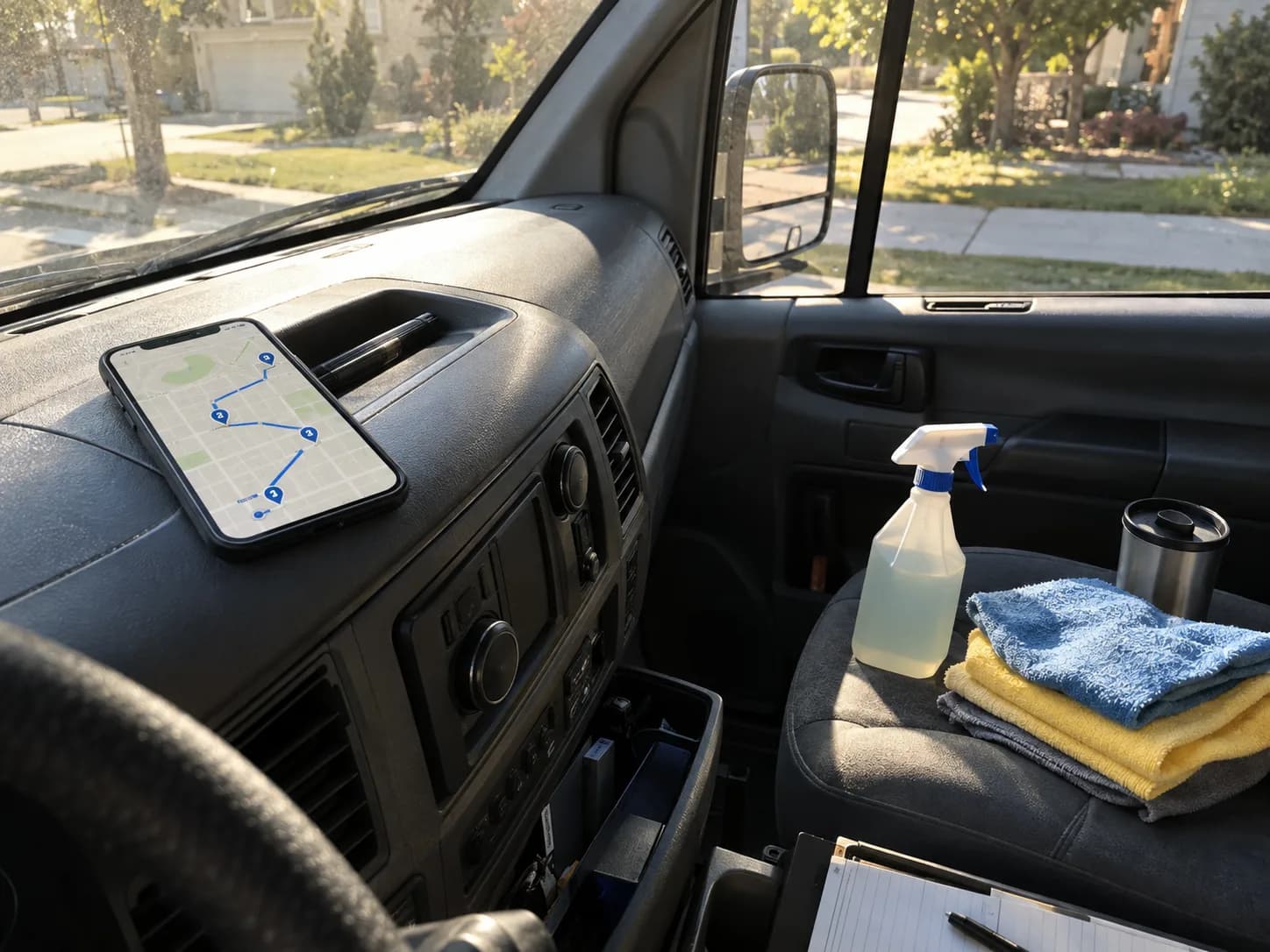
If you run a shop, your schedule is about time. If you run a mobile detailing business, your schedule is about time and distance, and distance is the part most detailers never plan for. Two jobs booked an hour apart look fine on a calendar. They stop looking fine when the second driveway is 40 minutes away in afternoon traffic.
Drive time doesn't show up on an invoice, but you pay for it on every job. You pay in fuel, in wear on your rig, and in the car you couldn't fit in at the end of the day. Good route planning is one of the few ways to earn more without raising prices or working longer hours.
Why Drive Time Quietly Eats Your Profit
Most solo mobile detailers realistically finish somewhere between two and five vehicles on a productive day, depending on the service mix. That range is wide, and the difference between the low end and the high end is rarely skill. It's usually geography.
Picture two versions of the same Tuesday:
The scattered day: Three jobs booked first come, first served. You drive north, then south across town, then back north. That's 90 minutes of driving, and you're rushing the last job because you're behind.
The clustered day: Four jobs booked in the same two zip codes. You drive 35 minutes total, finish early, and you had room for an upsell.
Same week, same detailer, very different paycheck. The goal of route planning is to make the second day your normal day.
Step 1: Split Your Service Area Into Zones
Before you touch a map app, define your territory. Pull up your service area and break it into three to five zones based on how you actually drive, not just on city lines. A highway or river can make two neighborhoods that look close feel far apart.
Assign zones to days
Once you have zones, give each one a home day. For example:
Monday and Thursday: west side
Tuesday and Friday: east side
Wednesday: the outer suburbs, where tickets tend to be bigger and drives longer
Saturday: open, for premium jobs and overflow
You don't have to be rigid. The point is that when a customer in the west side asks for an appointment, you offer Monday or Thursday first. Most customers are flexible if you give them clear options.
Set a hard edge on your service area
Decide how far you'll go and what it costs past a certain line. A travel fee for addresses outside your core zone protects the day when someone 30 miles out books a basic wash. Some detailers set a minimum ticket for far zones instead of a fee. Either works, as long as it's decided before the booking comes in and not in the driveway.
Step 2: Build Buffers You Can Actually Keep
Back to back scheduling is the fastest way to run late all day. Every job has hidden time around the actual detailing: parking, setting up hoses and tanks, walking the car with the customer, photos, payment, and packing up.
Time your real job cycle
For two weeks, write down how long each job takes from the moment you park to the moment you pull away. Compare that to what you quote customers. Most detailers find a 15 to 30 minute gap they never priced or scheduled for.
Scale time by vehicle size
A three-row SUV with kids' snacks in the seats isn't the same job as a clean coupe. Your schedule should know that. Set default durations by vehicle class so a large SUV automatically gets a longer block than a sedan.
Add a travel buffer, not just a drive estimate
If your map app says 18 minutes, plan for 25. That cushion absorbs traffic, a missed turn, or a gate code that doesn't work. Arriving 10 minutes early and prepping calmly beats arriving 10 minutes late and apologizing.
Step 3: Order Your Stops the Smart Way
Once jobs are booked, the order you run them matters. A few rules of thumb:
Start far, finish close. Do your farthest job first when you're fresh and traffic is lighter, then work your way back toward home.
Put long jobs early. Paint correction and heavy interiors belong in the morning, when an overrun won't push your whole day into the evening.
Watch the sun in hot months. Schedule exterior-heavy work for shaded or early slots when you can. That's especially true for coatings and anything that doesn't like a hot panel.
Keep one flex slot. Leave a gap near your densest zone for same-day requests or an add-on a customer asks for on site.
Step 4: Stop Offering Times You Can't Make
This is where most detailers lose control. If customers book online through a generic calendar, it will happily offer a 10 AM slot on the other side of town right after a 9 AM job that ends at 10. The calendar doesn't know you have to drive.
The fix is scheduling that calculates open times from where your previous job ends. DetailRoam was built around this problem. Its booking page only offers slots that already include drive time from the prior stop plus your finish buffer. It also checks that the address is inside your service area before the customer ever picks a time. When the day is set, you can optimize the stop order with one tap and send the whole route to Google Maps.
Whatever tool you use, make sure it answers one question: can I physically get there on time? If it can't, you'll keep fixing your schedule by hand every night.
Step 5: Use Your Route to Sell More Work
Density isn't only about saving fuel. It's also a sales tool.
Neighbor offers: When you're booked on a street, offer a small discount to neighbors who book the same day. You're already there, so the extra car costs you almost nothing in drive time.
Route day messaging: Tell past customers in a zone, "I'm in your area every Thursday." Recurring customers love predictability.
Maintenance clients by zone: If you run recurring maintenance plans, group them by zone and lock them into the same day each cycle. Your base route basically builds itself.
Track These Numbers Every Week
You can't improve what you don't measure. Keep an eye on:
Drive minutes per job: The number you want to shrink.
Billable jobs per working day: The number you want to grow.
Miles per week: Useful for fuel budgeting, and worth logging for taxes too.
Late arrivals: If this number isn't zero, your buffers are too tight.
Run it for a month, adjust your zones, and check again. Most detailers who tighten their routing find at least one extra job a week without adding a single hour to the day.
The Bottom Line
Route planning isn't glamorous, but it's one of the highest return habits in a mobile detailing business. Define your zones, schedule the right zone on the right day, build buffers that match reality, and use software that understands drive time. You'll spend less time behind the wheel and more time doing the work you actually get paid for.