October 26, 2026
How Much to Charge for Ceramic Coating: A Pricing Guide for Detailers
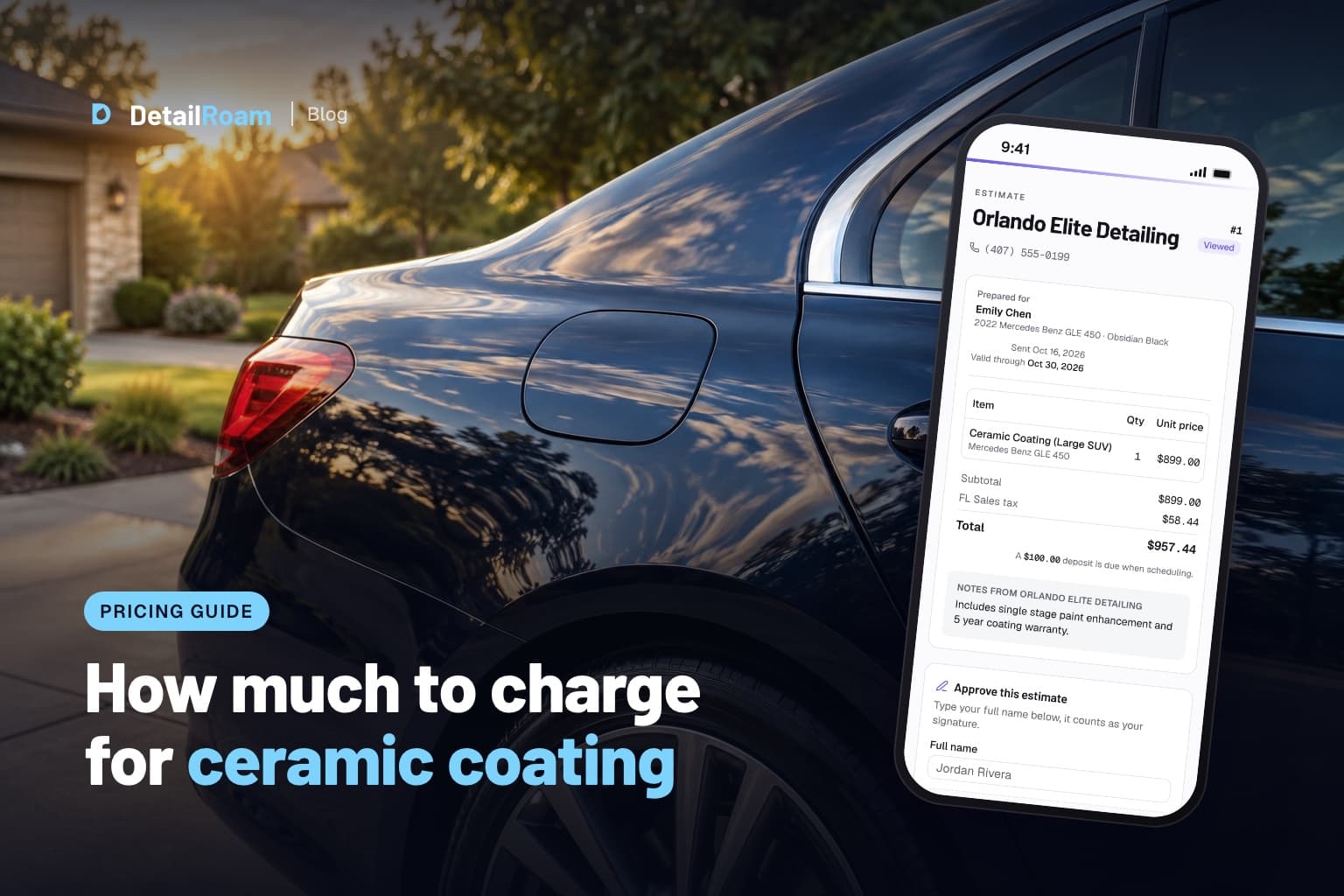
Ceramic coating is one of the few services that can turn a single appointment into a four figure ticket. It is also one of the easiest to underprice. Many detailers set a coating price by looking at what the shop down the road charges, then spend twice as long on prep as they planned and end up working for less than they make on a basic interior.
This guide breaks down what a customer is really paying for, the factors that should move your price up or down, the ranges you will typically see, and a simple formula you can use to price coating jobs with confidence.
What the customer is actually paying for
The bottle of coating is the smallest part of the price. A coating only looks as good as the paint underneath it, and it locks in whatever is there, swirls and all. So the real value is in four things:
Prep and correction time. Washing, decontamination, polishing and panel prep usually take far longer than applying the coating itself.
The product and its durability. A one year coating and a multi year professional coating are different products with different costs.
Your skill and the risk you carry. Leveling a coating correctly, especially on soft or dark paint, takes practice. Mistakes are expensive to fix.
The warranty and aftercare. Many professional coatings come with a warranty that depends on maintenance washes, which means an ongoing relationship with the customer.
When you explain your price in those terms, the conversation stops being about the bottle and starts being about the result.
The factors that should change your price
Vehicle size
A large SUV or truck has far more paint, glass and wheel surface than a coupe. Most detailers price coatings by vehicle class, with each step up adding time and product.
Paint condition and correction level
This is the biggest variable. A new car with clean paint might need a light polish. A daily driver with years of automatic car washes might need a compound and a finishing polish. Price the correction separately in your head, even if you show the customer one total.
Coating durability
Entry level coatings that last around a year cost less and apply faster. Professional multi year coatings cost more, often require more careful application, and justify a higher price because the customer is buying years of protection.
Extras
Wheel faces, wheel barrels, glass, plastic trim, and interior fabric or leather coatings are all add ons that take real time. List them as options instead of quietly including them.
Your market and your positioning
Prices vary by region and by the type of customer you serve. A detailer focused on enthusiast and luxury vehicles can and should charge more than one focused on daily drivers, because the expectations and the risk are higher.
Typical ceramic coating price ranges
Every market is different, but in many parts of the United States coating prices tend to fall into three tiers for a midsize car:
Entry tier: a one to two year coating with a wash, decontamination and light polish, often in the range of $500 to $900.
Mid tier: a multi year professional coating with a one step correction, commonly around $900 to $1,800.
Premium tier: a long lasting coating with multi stage correction, wheels and glass included, usually $1,800 and up.
Use these as a sanity check, not as your price list. Your own numbers should come from your time and costs, which is where the formula below comes in.
A simple formula to price coating jobs
Work it out from the hours, not from the competition:
Estimate your hours. Add up wash and decontamination, correction, panel prep, application and cleanup for that vehicle class and paint condition.
Multiply by your target hourly rate. Pick a rate that covers your income goal, taxes and the time you spend not detailing, such as driving, quoting and admin.
Add product cost. Include the coating, pads, compounds, panel prep and towels used on the job.
Add overhead and margin. Insurance, fuel, equipment wear and software all need to be covered, and a healthy margin pays for the jobs that run long.
Here is an example. Say a midsize SUV with average paint takes ten hours from start to finish, your target is $85 an hour, and product and supplies run about $120. That is $850 in labor plus $120 in product, or $970. Add 15 percent for overhead and margin and you land near $1,115. Round it to a clean package price like $1,099 or $1,149 and you know exactly why you charge what you charge.
Build packages instead of one price
Customers like choices, and a good, better and best lineup makes the middle option feel like the smart pick.
Good: entry coating, light polish, paint only.
Better: multi year coating, one step correction, paint and wheel faces.
Best: long lasting coating, multi stage correction, paint, wheels, glass and trim, plus the first maintenance wash.
Price each package by vehicle size and keep the names simple. If you sell coatings online, make sure your booking page shows the real price for the customer's vehicle class so there are no surprises. Our general mobile detailing pricing guide covers how to structure prices by vehicle size.
Present the price with an estimate, not a text
A coating is a considered purchase. Customers rarely say yes to a four figure number sent as a one line text. Inspect the paint, show the customer what you see under a light, and send a clear estimate that lists the correction level, the coating, the durability and any extras.
Ask for a deposit to hold the date. Coating jobs block out a full day or more, and a no show on a coating day is expensive. In DetailRoam, you can send a priced estimate the customer approves from their phone by typing their name, with the deposit amount shown right on it.
Do not forget the maintenance revenue
Most professional coatings perform best, and keep their warranty, when the car gets regular maintenance washes with the right products. That is recurring revenue. Offer a maintenance plan with the coating, explain why it protects the investment, and schedule the first wash before you leave. Our guide on building recurring revenue shows how to turn those washes into monthly clients.
Common coating pricing mistakes
Pricing by the product alone. The bottle is the cheap part. Your time is not.
Quoting before you see the paint. Give a starting price, then confirm after inspection.
Underestimating correction. Soft paint and heavy swirls can double the time.
Ignoring the weather. Mobile coating work needs shade, low dust and time to cure. Build that into the schedule, or offer coatings only when you have a covered space.
Skipping the aftercare talk. A customer who runs a fresh coating through an automatic wash the next day will blame the coating, and you.
Frequently asked questions
How much should I charge for a ceramic coating on a car?
Base it on your hours, product cost and overhead. For a midsize car, many detailers land somewhere between $500 for an entry coating with a light polish and $1,800 or more for a multi year coating with correction, but your own costs and market should set the final number.
Should I charge more for paint correction before a coating?
Yes. Correction is usually the most time consuming part of a coating job, so price it by the level of correction the paint needs. Many detailers include a one step polish in the base package and charge extra for multi stage correction.
Is it better to price ceramic coating by vehicle size?
Pricing by vehicle class is the most common approach because larger vehicles take more time and product. Combine it with a paint condition adjustment after inspection so you are not stuck with a price that does not cover heavy correction.
Should I take a deposit for ceramic coating jobs?
Yes. Coating appointments often take a full day, so a deposit protects that time from last minute cancellations and shows the customer is committed. Make your cancellation policy clear when they book.