November 23, 2026
How to Protect Your Detailing Business From Damage Claims
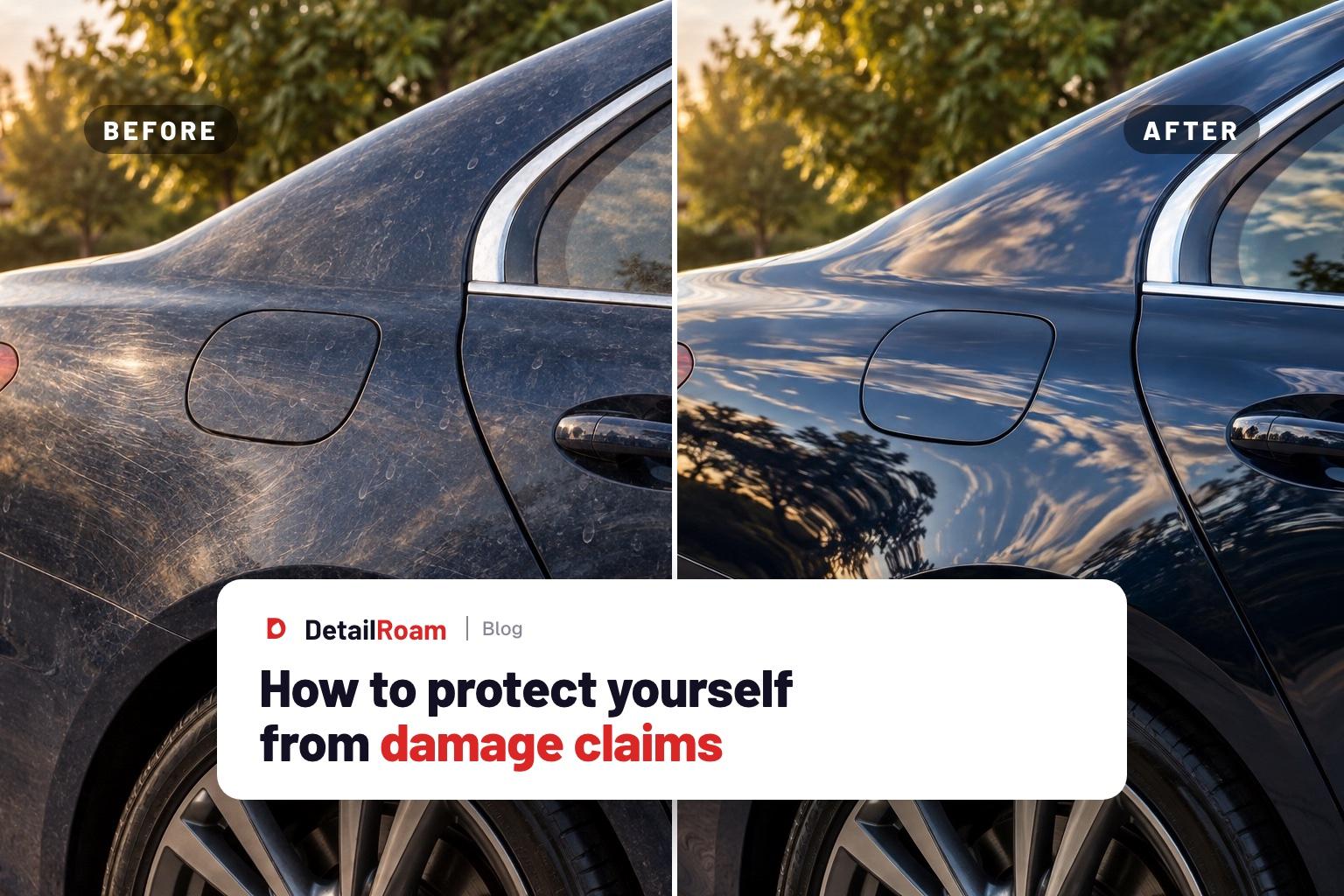
Sooner or later, every detailer hears it: "That scratch was not there before." Sometimes the customer is right and something went wrong. Far more often the damage was already there, and the customer simply never noticed it until the car was clean enough to see it.
Either way, a damage claim you cannot answer costs you money, time and a customer. The good news is that most claims are preventable, and the rest are much easier to resolve when you have the right routine. Here is how to protect your business.
The claims detailers see most often
Scratches and swirls that customers notice after the car is clean
Curb rash and chips on wheels
Rock chips revealed on the hood and bumper
Interior stains or tears that were hidden under clutter
Failing clear coat or peeling paint on older or repainted panels
Electronics or screens that stop working after an interior clean
Missing personal items
Most of these come down to one question: what condition was the car in before you started? If you can answer that with photos and a signature, most disputes end there.
Build a pre inspection routine
The inspection is the most important ten minutes of the job. Do it before you touch the car, and do it the same way every time.
Walk the whole car. Go panel by panel in the same order every time so nothing gets skipped.
Photograph every angle. Front, rear, both sides, each wheel, the roof if you can see it, the windshield, and the interior from both front doors and the back seat.
Get close on existing damage. Take a close up of every scratch, chip, dent, curb rash and stain, with something in the frame that shows where it is on the car.
Check the dash. Photograph the dashboard with the car on, showing the mileage and any warning lights.
Note what you cannot fix. Deep scratches, permanent stains and failing clear coat should be written down and mentioned to the customer before you start.
Use good light. Many claims involve swirls and fine scratches that only show up in direct sun or under an inspection light, so look for them before the customer does.
Get a customer sign off
Photos show the condition. A signature shows the customer saw it too. Walk the car with the customer when you can, point out existing damage, and have them sign or initial the condition report. If they are not home, text them the photos and the notes before you begin and ask them to reply to confirm.
This is easy to skip when you are busy, and it is exactly what protects you on the one job that goes sideways. In DetailRoam, every appointment has a vehicle condition report with guided walkaround photos for each car, notes for existing damage, and a customer sign off right on your phone, so it becomes part of the job instead of an extra step.
Put clear terms in writing
Your terms of service should set expectations before anyone is upset. This is not legal advice, and it is worth having a local attorney review your terms, but most detailers cover points like these:
Pre existing damage is documented before the job and is not the detailer's responsibility.
Cleaning can reveal damage that was hidden by dirt, such as rock chips, scratches and failing paint.
Some stains, odors and scratches cannot be fully removed, and results are not guaranteed for those.
Older paint, repainted panels, aftermarket parts, wraps and protective film carry extra risk.
Customers should remove personal items and valuables before the job.
How and when the customer should report a concern, such as within 24 hours of the job.
Show your terms when the customer books, include them on your estimate, and mention the important ones in person when the car has obvious problem areas.
Prevent the damage you can control
Documentation protects you from false claims. Good technique protects you from real ones.
Do a test spot before polishing or using strong chemicals, especially on older or repainted paint.
Know which surfaces need special care: matte paint, wraps, paint protection film, piano black trim, touch screens and open pore wood.
Use separate tools for wheels and paint, and never reuse a dropped towel.
Keep polisher cords and pressure washer hoses away from the paint.
Tape off sensitive trim and emblems before heavy correction.
Train every detailer on the same process. Our complete car detailing checklist is a good starting point.
When a customer says you caused damage
How you handle the first conversation often decides whether a claim becomes a review, a refund or a lawsuit.
Stay calm and listen. Thank them for telling you and ask for photos of what they see.
Compare against your inspection. Pull up your before photos and notes and look at the exact spot.
Look at it together. If the photos are unclear, offer to come back and inspect the car in person.
Be fair. If the damage was already there, show the customer the photo politely. If it was your mistake, own it and fix it quickly.
Fix small things fast. A missed spot or light marring from the job is often cheaper to correct than to argue about.
Bring in insurance for real damage. If the damage is significant and caused by the job, report it to your insurance carrier promptly.
Document everything. Keep the messages, photos and what you agreed to.
Have insurance as the backstop
Even the most careful detailer can make a mistake. General liability alone usually does not cover the car you are working on, so ask an agent about garagekeepers coverage for vehicles in your care. Our guide to mobile detailing insurance explains the policies most detailers carry.
Frequently asked questions
How do I prove damage was already there before a detail?
Take time stamped photos of every panel, the wheels and the interior before you start, get close ups of existing damage, and have the customer sign off on the condition report. Keep those records with the job.
Do I need a waiver for my detailing business?
Many detailers use written terms or a waiver that covers pre existing damage, hidden damage revealed by cleaning, and services that carry extra risk. Have a local attorney review yours so it fits your state.
What should I do if a customer says I scratched their car?
Stay calm, ask for photos, compare them with your before photos, and inspect the car together if needed. Fix it quickly if it was your mistake, and contact your insurance carrier if the damage is significant.
Does insurance cover damage to a customer's car during a detail?
General liability policies usually exclude vehicles in your care. Garagekeepers coverage is designed for damage to customer vehicles while you are working on them, so ask your agent about it.