November 2, 2026
Mobile Detailing Insurance: The Coverage You Actually Need
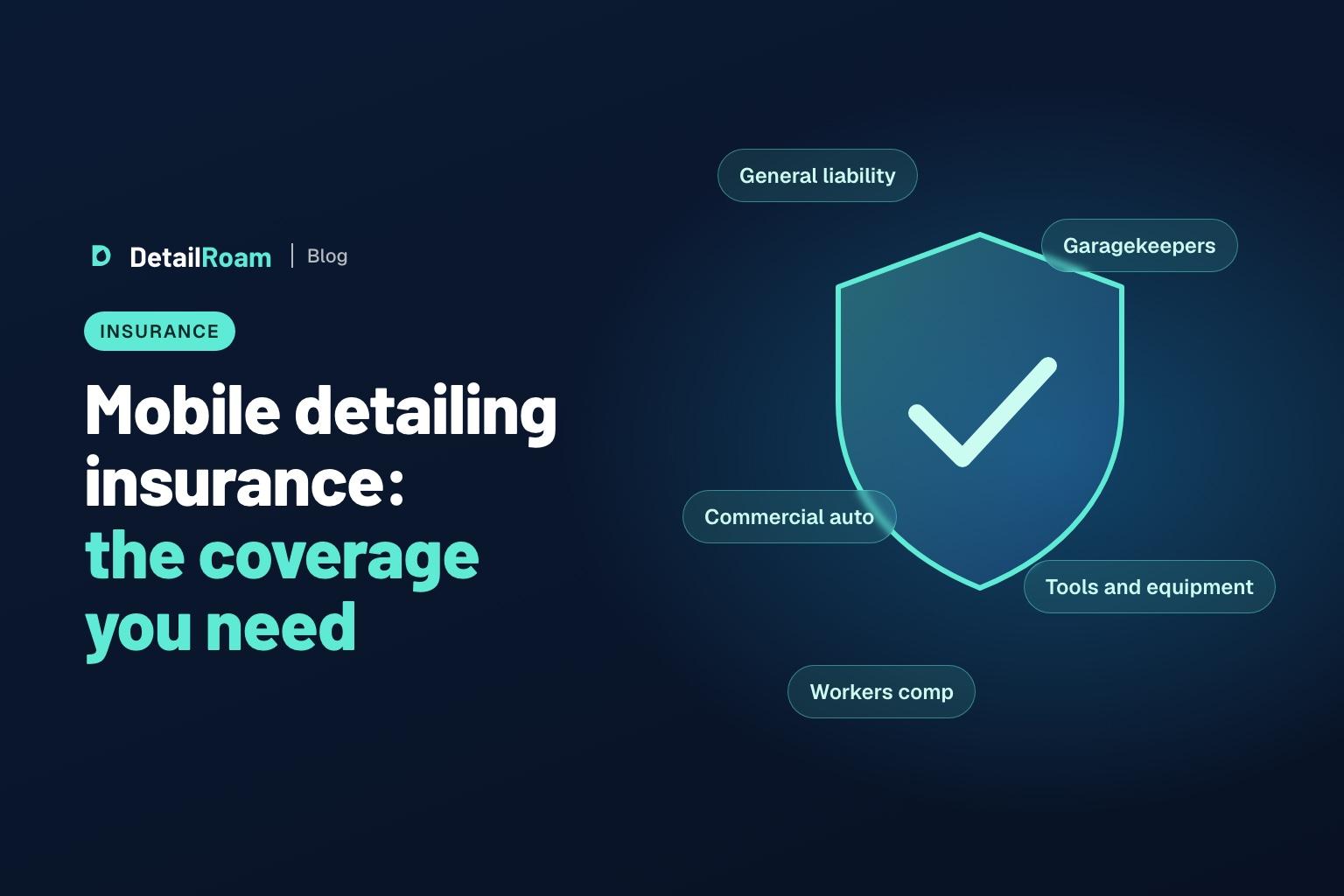
Mobile detailers work on other people's most expensive possessions, on other people's property, with water, chemicals and machines. That is a lot of ways for something to go wrong. Most of the time it does not. But the one time a customer's dog slips on a wet driveway, a polisher burns through a clear coat, or your equipment disappears from your trailer, the right insurance is the difference between an annoying week and the end of your business.
This guide explains the policies mobile detailers typically carry, what each one covers, what drives the cost, and what to ask an agent. It is general information, not insurance or legal advice. Coverage rules vary by state and by carrier, so always confirm the details with a licensed agent.
Why your personal policies are not enough
Your personal auto policy is written for driving to work and running errands, not for carrying a business setup to paid jobs every day. Many personal policies limit or exclude business use. Your homeowners or renters policy may cover very little business equipment, and almost never covers damage you cause to a customer's car. If you are detailing for money, you need business coverage.
The core policies for mobile detailers
General liability
General liability covers bodily injury and property damage to other people caused by your business operations. Think of a customer tripping over your hose, overspray landing on a neighbor's car, or chemicals staining a customer's driveway. It is the foundation policy, and it is usually the first thing a commercial client asks for proof of.
The catch: general liability usually excludes damage to property in your care, custody or control. The car you are working on is exactly that, which is why the next policy matters so much.
Garagekeepers coverage
Garagekeepers coverage is designed for damage to customer vehicles while they are in your care. For a detailer, that might be a scratch from a dropped tool, paint damage from a polisher, a chemical that etches trim, or a vehicle damaged while you are moving it. For most detailers this is the policy that protects you from the claims you are most likely to face.
Ask your agent how the policy responds to a claim. Some versions only pay when you are legally liable, while others can pay for the damage regardless of fault, which can make it easier to keep a customer happy. Also ask about limits per vehicle, especially if you work on high value cars.
Commercial auto
If you drive a van, truck or trailer setup to jobs, a commercial auto policy covers that vehicle while it is used for business. It also matters if you tow a trailer with a water tank and equipment, since the weight and setup change your risk. If you ever move a customer's car, ask how that is covered too.
Tools and equipment coverage
Pressure washers, generators, extractors, polishers and a trailer full of product add up fast. Tools and equipment coverage, sometimes called inland marine, covers your gear against theft and damage whether it is in your rig, at a job or in storage. Many detailers learn about this policy the morning after their trailer gets broken into.
Workers compensation
Once you hire employees, most states require workers compensation insurance. It covers medical costs and lost wages if an employee is hurt on the job, which in detailing can mean slips, chemical exposure or strain injuries. The rules for when you need it, and whether it covers you as the owner, vary by state.
Hired and non owned auto
If employees ever drive their own cars for your business, hired and non owned auto coverage can protect you when their personal policy falls short. It is often added to a general liability or commercial auto policy.
Umbrella coverage
An umbrella policy adds extra limits on top of your liability and auto policies. It becomes more important as you grow, take on fleet and dealership work, or start working on luxury and exotic vehicles.
What affects the cost of detailing insurance
Premiums depend on your carrier, your state and your business, but the same factors come up again and again:
Your services. Paint correction, ceramic coatings and window tint carry more risk than a wash and vacuum.
The vehicles you work on. High value and exotic cars usually mean higher limits and higher premiums.
Your revenue and payroll. Bigger operations pay more because there is more exposure.
Your limits and deductibles. Higher limits cost more. A higher deductible lowers the premium but raises what you pay per claim.
Your claims history. Fewer claims over time usually means better rates.
Insurance premiums are generally a deductible business expense. Our article on mobile detailing tax deductions covers the other costs worth tracking, and your tax professional can confirm what applies to you.
Certificates of insurance and commercial clients
Dealerships, property managers and fleet clients will often ask for a certificate of insurance before you start. Some will also ask to be listed as an additional insured on your policy, and some require minimum limits. Ask your agent how quickly they can issue certificates, because a slow agent can cost you a contract. If commercial work is part of your plan, our guide to fleet detailing contracts covers what those clients look for.
What does bonded and insured mean?
Insured means you carry insurance like the policies above. Bonded usually means you have a surety bond, which protects the customer if you fail to complete the work or, with some bonds, if an employee commits theft. Few residential customers ask about bonds, but some commercial clients do. If you advertise bonded and insured, make sure both are actually true.
Lower your risk before you ever file a claim
The best claim is the one you never have to file. A few habits cut both real damage and disputed damage:
Do a walkaround inspection with photos of every panel, the wheels and the interior before you start.
Note existing scratches, chips and stains, and have the customer sign off on the condition.
Use test spots before any polishing or strong chemicals, especially on older or repainted panels.
Keep hoses and cords out of walkways and put out a cone or sign on wet driveways.
Train every employee on the same process with a written checklist.
Our complete car detailing checklist includes the inspection steps, and in DetailRoam every job has a condition report with walkaround photos, damage notes and a customer sign off on your phone.
Questions to ask your insurance agent
Does my general liability exclude vehicles in my care, custody or control?
Does my garagekeepers coverage pay only when I am legally liable, or regardless of fault?
What is the limit per vehicle, and is it enough for the cars I work on?
Is my equipment covered when it is in my trailer, at a job and in storage?
Does my auto policy cover business use and towing my trailer?
When do I need workers compensation in my state?
How fast can you issue a certificate of insurance or add an additional insured?
Frequently asked questions
What insurance do I need for a mobile detailing business?
Most mobile detailers start with general liability and garagekeepers coverage, then add commercial auto for their work vehicle, tools and equipment coverage for their gear, and workers compensation once they hire employees. A licensed agent can tailor the mix to your services and state.
Does general liability cover damage to a customer's car?
Usually not. General liability commonly excludes property in your care, custody or control, which includes the car you are working on. Garagekeepers coverage is designed for that risk.
Do I need insurance to detail cars part time?
If you detail for money, even part time, you carry the same risks as a full time detailer. A single claim on a customer's car can cost far more than a year of premiums, so it is worth getting at least liability and garagekeepers coverage from day one.
Is detailing insurance tax deductible?
Business insurance premiums are generally a deductible business expense. Confirm with your tax professional how it applies to your situation.